Showing posts with label VSE. Show all posts

Thursday, January 31, 2019

URSP Student Mera Shabti Evaluates Wetlands as a Natural Defense Against Storm Surges

Over recent years, countless devastating hurricanes have caused severe destruction to coastal habitats. Traditional methods have proven to be costly and non-sustainable. I joined forces with other engineering students to investigate how wetlands can be constructed along shorelines as a means of natural defense against storm surges. As part of the geotechnical team, I spent the past year characterizing soil at a local wetland, and developing a methodology to conduct erosion tests in a lab that could replicate erosion patterns seen at the wetland. Now, a normal week consists of running two to three erosion tests at the George Mason John Toups Instructional Laboratory for Civil, Environmental, and Infrastructure Engineering, along with respective data collection and analysis. We predict that when keeping all other factors constant, density and the presence of vegetation have the greatest potential to impact rates of erosion. Thus far, comparing results of tests with vegetation as the varied factor against tests with density as the varied factor shows significant increased reduction of erosion with the presence of vegetation. This means that tangible improvement can be achieved by construction of a wetland.

Getting involved in this research launched me on an enlightening journey where I was able to practice and nourish my out-of-the-box thinking skills. I have become part of a scholarly group of graduate researchers at GMU, allowing me to expand my knowledge of elements such as a typical publication process and to gain general experience in the industry. Since becoming part of OSCAR, I have been able to build on this experience by interacting with researchers in other disciplines, and I’ve learned more about things that can be looked past when diving into a research project of this magnitude, such as proper acknowledgements, avoiding falsification of data, and more. I am excited to continue with my research all the way through, to see how I can ultimately contribute to society by unveiling the practical applications of my studies.

Wednesday, January 30, 2019

URSP Student Mahmoud Moukalled Researches Possible Applications of Self-Driven Microparticles

Throughout the semester, I have been researching possible applications of self-driven microparticles. What got me interested in this specific research is the ability of something so small to be able to have such large impact on the world around us. The research was first introduced to me when my mentor, Dr. Jeffery Moran, came to present his research at one of my classes. It was only soon after that I contacted him and eventually became an OSCAR undergraduate research assistant.

When I graduate I want to work in the field of sustainability and focus on the everyday improvement of the quality of human life.  This research provides me with the opportunity to take the essential first steps to pursuing my long-term goals. This is because many of the applications of microparticles can aid the effort of improving the quality of life for humans all over the world. A big example of these applications is wastewater decontamination which could help over a 3rd of the worlds global population. 

On a weekly basis, my mentor holds meetings named “Journal Clubs” in which one of the members of the research group is to find a scholarly article based on the current research they are doing and present it to the rest of us. This helps me understand and learn certain topics at an efficient and relaxed rate. Apart from the Journal Club meetings, weekly one-on-one meetings are conducted as well to ensure the retention of information and also to keep track of how much work each individual has done.  One thing I discovered throughout my semester of doing research is how important and connected research really is. One researcher will never fully understand or make a discovery without the help of hundreds of previous researchers making their own, separate discoveries.
            

Tuesday, January 29, 2019

URSP Student Farbod Moghaddam Supports Research on the Development of Low Cost, Wireless, High Performance Electrochemical Sensors

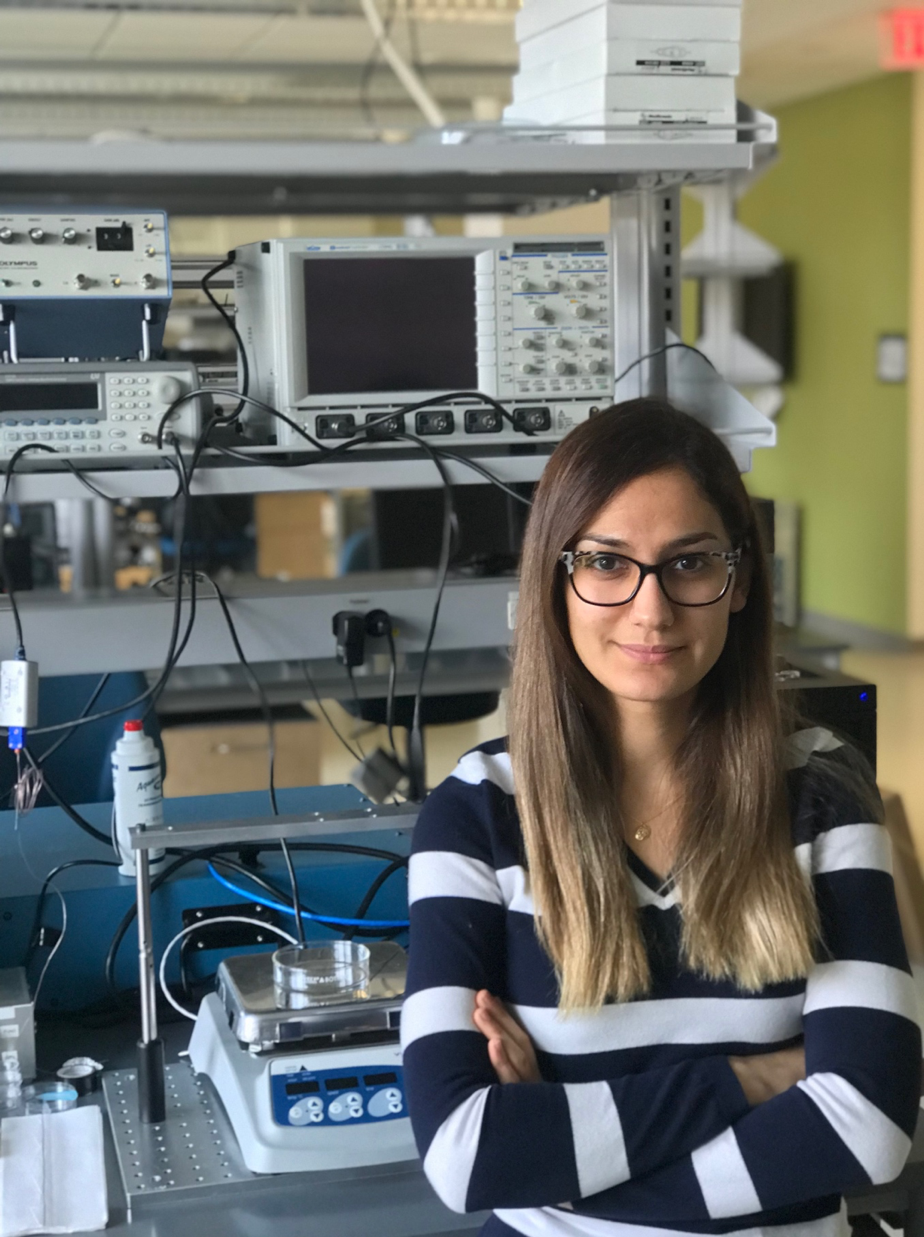
My name is Farbod Moghaddam and I am senior majoring in Mechanical Engineering. I have been an Undergraduate Research Assistant at the Kang Lab for Micro/Nano Mechanics and Photonics with 2D materials since September 2017 supporting research on the development of low cost, wireless, high performance electrochemical sensors using graphene and radio frequency identification technology. During my freshman year, my research proposal to develop graphene-based supercapacitors as an alternative method of energy storage ranked top three in the inaugural Mechanical Engineering Research Proposal Competition and ever since then I have been fascinated with the wonder material that is graphene. 

My research focuses primarily on developing 3D porous graphene nanostructures with pore sizes of less than 2 nanometers in diameter (the average human hair strand is 100,000 nanometers) to better adsorb gas molecules. The novel method of graphene synthesis practiced at our lab relies on the carbonization of an organic polymer with a favorable composition through a laser process. The resulting material, commonly referred to as laser induced graphene, is transfer and catalyst free making it favorable for electronic applications since the conductivity is not comprised due to defects which typically occur during the synthesis process. Additionally, this method of synthesis allows for engineering of 3D porous structures through adjustment of laser power. There are two methods through which gas molecules interact with graphene: chemical adsorption (chemisorption) and physical adsorption (physiorption). One can think of physiorption as a net that physically entraps the gas molecules, which is why the 3D porous structure is so beneficial due to the high surface area to volume ratio it provides, whereas chemisorption is the chemical interaction causing the graphene to “grab” onto the gas molecules. Although the 3D porous graphene responds to the presence of all polar gases, selectivity towards certain gases can be induced through embedding reactive metals before the carbonization process. Therefore, this project long term goal is to provide the scientific community with a low cost, high performance gas sensing platform to build upon.

Every week, my team and I meet with our mentor to provide updates on recent experimental findings from the work done at the lab during the previous week and to discuss potential steps forward. Throughout this past semester (Fall 2018) I have conducted experiments with various concentrations of palladium functionalized 3D porous graphene and acetone (CH3) to determine general response trends. Palladium is highly reactive with hydrogen gas (H2) and through monitoring the change in resistance before and after exposure to acetone, it was determined that graphene samples with higher concentrations of palladium responded quicker to the presence of gas molecules and had a greater increase in resistance.

Upon graduation in Spring 2019, I hope to pursue my interest in nanotechnology and passion for research by pursuing a PhD in Mechanical Engineering with a particular focus on energy storage methods, heat transfer, and development of biomedical devices. 

Thursday, January 17, 2019

URSP Student Ahmad Alach Tests Common Assays for Detecting Reactive Oxygen Species

Since the beginning of this semester, I have had the privilege of working in Dr. Caroline Hoemann’s Biomaterials and Nanomedicine Laboratory as part of the OSCAR Undergraduate Research Scholars’ Program grant. Our project is focused on testing common assays for detecting reactive oxygen species (ROS) and developing a new, easy, and efficient alternative one. The reason I became interested in this project is its usefulness in finding a way to quantify and rid the body of excess ROS that can become toxic. These ROS are thought to be precursors for many chronic diseases like atherosclerosis and diabetes. I also knew that the skills that I would learn this semester would be vital to my educational development. As a freshman, I worked as a research assistant in a Bioengineering lab that was focused on the neuroscience aspect of the field and I felt like I was lacking the lab bench experience that comes to mind when one hears the word “research.” That’s why when I got the opportunity to work in a much more hard-sciences based laboratory, I jumped at the opportunity.

As a student hoping to enter medical school after graduating, this semester has really helped me hone the skills that I hope to use as a researcher later on in my career. I see this semester as the foundation upon which I can build on during my time as a medical student and beyond. Much of my weekly routine is spent doing the same things I’ll hopefully be doing a lot of in a few years. I do literature searches, write and edit study protocols, and carry out the experiment of the day either with or without the help of my mentor, Dr. Hoemann, depending on the difficulty of the test at hand.

One thing I discovered this term is that research is much more of a give and take process than I originally thought. I can’t even count the number of times I took one step forward and then two steps backward. Sure, it’s frustrating but it’s what makes the process that much more rewardable when things go right.

Wednesday, January 9, 2019

URSP Student Holly To Researches How Water Quality is Affected by Land Use

During the winter break of 2017, I assisted my professor on learning about a new equipment known as the ion chromatogram in the lab. I learned how to use the ion chromatograph as well as create necessary components for the data acquisition process. I would investigate the ion levels in local stream water. From there, my interest in finding out how water quality is affected by land use developed. Participating in this project has been allowed me to see the overall impact of land use across different seasons on the quality of water. 
When I think about my long-term goals, I believe it will play a large role in the direction I am aiming towards. I hope to one day attend medical school and laboratory experience is a necessity. This project has not only given me an opportunity to research something I enjoy but also provide me with laboratory experience that I may share when I apply to medical school. 
On a weekly basis, I run lab tests that include finding pH, turbidity, conductivity, alkalinity, and total suspended mass. In addition, I would run each sample collected- which is collected biweekly- through the ion chromatogram. 
What I discovered this term is that there are always set backs with researching. Through my research process, I have experienced multiple set backs that keep me incapable of moving ahead until the problem is resolved. While I realize that these issues do hold me from finishing my research in a timely manner, it allows me to learn that research doesn’t follow a timely schedule and that patients areimportant in the research process. 

Friday, December 14, 2018

URSP Student Gerson Galindo Researches Cyclic Corrosion Fatigue of Aluminum

My name is Gerson Galindo, and I am a senior mechanical engineering student at George Mason University. My research consists of studying the effects that corrosion has on the fatigue life of Aluminum alloy 7075 T651 ( a commonly used material for aircrafts). My interest on this topic began when I took a material science course, one of the topics covered in that class was corrosion. I learned that during the design of an engineering structure, corrosion plays an important factor. Corrosion can reduce the life of the structure, lower the safety factors, and increase financial costs. Corrosion is inevitable, corrosion comes in different forms and any engineering design will always be expose to a corrosion environment. My activities consist on going to the machine shop and cut metal using different tools, taking the machined specimens to the lab and run corrosion and fatigue tests. I analyze the experimental data and find correlations from previous research. I document every source and procedure of the experiment. I am grateful for having the opportunity to explore an area of my interest and contribute to the literature of corrosion. The OSCAR program helps students to test their hypothesis and come with conclusion in the research field. This allow students to come with novel ideas, as well as enrich their academic background. When my research ends, I plan on publishing my findings on an engineering publisher. Moreover, I have plans to attend conferences where I can share my research. 

Thursday, December 13, 2018

URSP Student Gabriel Earle Studies Acoustic Monitoring of Manufacturing Infrastructure

My name is Gabriel Earle and I am a Civil Engineering student here at Mason. I became interested in
doing research this semester in order to further my academic pursuits and gain some different perspectives on Civil Engineering. Last Spring, I met with Dr. David Lattanzi, a structural engineering professor here at Mason, and he shared with me details about an upcoming project that involved audio data. I was thrilled to hear this, because I had a lot of experience with audio from my hobbies as a music producer and drummer, and I never expected to be able to use this knowledge in an academic setting.

This semester I worked with the guidance of Dr. Lattanzi and one of his graduate students, Jeff Bynum, on the project. The primary focus of our work this semester was to evaluate the feasibility of using acoustic data (audio) signals for inspecting and analyzing the movements of manufacturing infrastructure. We explored using machine learning to detect what kind of movements the machines were making. Specifically, a convolutional neural network (CNN) which attempts to learn the characteristic features in the audio of each kind of movement the machine could make. CNNs are a technique primarily used in image processing, so in order to implement acoustic data, we created spectrograms of our data set. Spectrograms are 3-dimensional visual representations of audio which display frequency intensity over time for the entire audible frequency spectrum. We utilized the spectrograms frequency intensity data much like color intensity data might be used in a traditional image processing approach. 

So far, our methods are gaining more and more capability to segment the audio data into machine movements that are verifiably correct against video data. We hope to continue to work on our data models and continue to look into the damage detection side of the research question in the coming weeks and months. 

Monday, December 10, 2018

URSP Student Shervin Abdollahi Investigates Fabrication of Implantable Hydrogel Devices with Component Responsive to Light and Ultrasound for Localized Chemotherapy

Having lost my grandfather to cancer at a very young age, was one of the main reasons I got interested in my URSP project. I was only 7 years old when my grandfather got diagnosed with stage 3 lung cancer. As the only viable treatment option his doctors recommended systemic chemotherapy in which the drug is sent all over the body in order to target and destroy the affected cancerous tissue. However, my grandfather’s organs couldn’t hold on to the treatment for very long and we lost him shortly thereafter. Growing up, I always wondered what a good viable alternative to the systemic chemotherapy could be and once I joined the Bioengineering team here at George Mason University, I found out about different research around this topic.  

Localized chemotherapy is among successful treatment options recently developed for cancer therapy. With this approach, the chemotherapeutic drug can be locally delivered to the affected cancerous tissue and released on demand via implantable drug loaded devices. These devices are mainly composed of a thermosensitive hydrogel embedding certain dosage of chemotherapeutic drug and photosensitive nanoparticles. Once the hydrogel receives enough heat energy from noninvasive energy sources such as laser and ultrasound, it contracts and release the drug embedded in it. Photosensitive nanoparticles can accelerate this heating process, by absorbing light energy that is tuned to their wavelengths and transforming that as heat energy into the hydrogel. 

My biggest challenge in this project was optimizing the hydrogel fabrication process. Since each hydrogel fabrication attempt takes 3 days, I work in the lab few consecutive days every week to develop my hydrogel and find out the optimal drug load concentration. Along this project, I learned to design some 3-D mold structures for my implantable device made of PDMS. While there is still a great deal of work needs to be done for this project, I feel honored to have played small part in developing new treatment options for cancer patient. Cancer treatment research has been my long-time interest and I am planning to continue this research for my graduate studies. 

Tuesday, December 4, 2018

USTF Student Farbod Moghaddam Presents Research at the American Society of Mechanical Engineers International Mechanical Engineering Congress and Exhibition


I had the opportunity to present a research project that I have been working on for over year at the American Society of Mechanical Engineers (ASME) International Mechanical Engineering Congress and Exhibition the weekend of November 9th – 11th. During my time at the conference, I attended committee meetings where I participated in conversations regarding early career engineer development and leadership enhancement for student projects. My colleagues and I also attended the ASME Old Guard competitions where the communication skills of pre-professional engineers were challenged in an effort to promote the development of societal engineers. At the undergraduate expo where I presented my poster on the development of high performance gas sensors based on 3D porous graphene and RFID, I met numerous undergraduates working on some incredibly fascinating topics including bone strength enhancement, development of nanofibers using worm silk, and introducing artificial bandgaps to graphene through atomic stitching for development of next generation transistors. Throughout the event I also had an opportunity to interact with faculty members from different universities and members from the industry to communicate the impact of our work and network. Overall, the experience was incredibly rewarding and eye opening in terms of what topics were being explored by other undergraduate researchers in the field.

Monday, December 3, 2018

USTF Student Daniel Mitchell Presents Nanomaterials Research at International Mechanical Engineering Congress and Exposition in Pittsburgh

My name is Daniel Scott Mitchell and I am a B.S. Mechanical Engineering Candidate (’20) and Honors College student here at George Mason University.

Over the past 14 months, I have been developing a novel, cost-effective, and scalable method to fabricate the nanomaterial graphene with Dr. Pilgyu Kang (Mechanical Engineering), Farbod Moghaddam (Mechanical Engineering ’19), and our collaborators from the Korea Research Institute for Chemical Technology in Daejeon, South Korea. Our research has shown that our graphene has great promise for practical applications, including high-sensitivity and wireless gas sensing.


This November, Farbod and I had the opportunity to present our research at ASME’s International Mechanical Engineering Congress and Exposition in Pittsburgh, Pennsylvania. It was a thought-provoking and humbling experience to share our work at the world’s largest mechanical engineering conference and interface with our field’s top researchers, scholars, and industry leaders. In the future, I am excited for further research regarding graphene and pursuing academia as a whole.

Tuesday, November 20, 2018

USTF Student Abdulaziz Albahkali Attends the Annual Meeting of the Biomedical Engineering Society


This year, Atlanta, Georgia hosted the annual meeting for the biomedical engineering society where academics, corporate leaders and healthcare providers, in biomedical engineering, gather. The things I gained through this meeting were experience, networking with people, and career development.This meeting was also a good experience to meet and talk with colleges and graduate schools from around the county. 

Wednesday, October 24, 2018

OSCAR Student Mubeen Farukh Researches the Heat Transfer Capabilities of Bimetallic Nano Particles

My name is Mubeen Farukh and I am a senior at George Mason University majoring in Mechanical Engineering. My research is on the heat transfer capabilities of bimetallic nano particles about 2 micrometers in length (a human hair is about 100 micrometers in diameter). I became interested in nano-particle after my research professor, Dr. Moran,  introduced their potential in an introductory presentation. He explained how they are self-propelled due to a redox reaction with hydrogen peroxide solution. This results in the particles ‘swimming’ in the solution, which in turn induces mixing of the solution.  As I got involved in the research, I learned about the potential uses of self- propelled nano-particles for targeted drug delivery, along with electronics and machine cooling.

This research is related to fluid mechanics, and particle interactions with the surrounding fluids. I plan on working in the field of fluid mechanics using the same (or similar) software that I am currently using for my nano-particles research. Participating in this research has allowed me greater access to professional insight into the field as well as software experience which I can build on later in my career.

A lot of my work involves reading and dissecting papers written by other researchers in the field of self-propelled nano-particles. On a day to day basis, I work on reading scholarly articles that mention self-propelled particles of various shapes (round, cylindrical), sizes, materials, and with different end goals, usually other than heat transfer. I communicate with my research professor via email and bi-weekly meetings on campus. Some of my work also involves working with COMSOL Multiphysics software to simulate simplified nano-particles and their behavior.


One important takeaway from my research this summer is the level of detail with regards to nano – particles. The physics at the nano scale requires a higher level of precision to deliver accurate simulation results.