Tuesday, December 11, 2018

URSP Student Eleri Burnett Researches The Economic Impacts of Losing a Coastal Shorebird Along the East Coast

The project I am currently researching attempts to assign a monetary value to an endangered shorebird along the East Coast Shoreline named the Piping Plover. In order to do this, I have pulled together data assigning the value of the ecosystem services of the Plover, essentially meaning what the organism provides for the habitat that it is in. 

I have always had an interest in birds, and as a business and finance major, I wanted to attempt a project that could link my two passions and provide a means of incentive for conservation of this bird and all birds in a way that could mutually benefit local economies along the east coast. If I am able to provide a compelling argument that the value of this bird is worth its conservation for the economic benefit it brings communities, more citizens can relate to the money factor and may be more willing to provide resources to help with wildlife conservation.

Even though multiple people told me this project was not going to be easy, I wanted to give it a shot anyway. I spent most of the former half of the semester researching methods and looking at how other researchers came about their economic data. After I used this data, I spent days mapping the precise territory of the Piping Plover’s territory through its sightings and use of an online map feature. The final month has been analyzing the concluding number and its significance. With this, I made the realization that many can say a project may be tough, but nothing is impossible; if you are willing to put forth the effort to complete something, it is absolutely possible. Sometimes, especially with hardship, it’s easy to get demotivated, but if you persevere and remember why you initially took on this research project, you may once again find your footing.

Monday, December 10, 2018

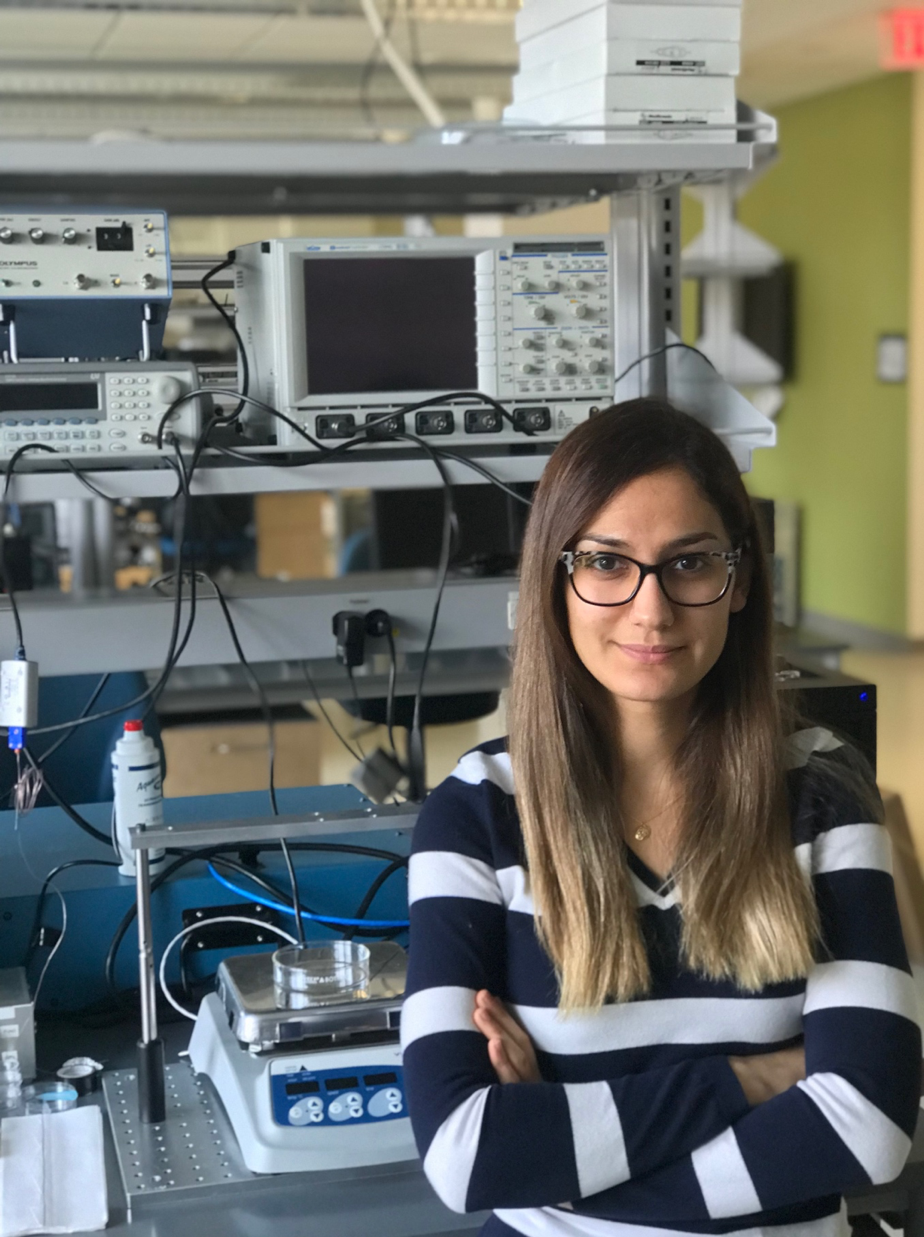
URSP Student Shervin Abdollahi Investigates Fabrication of Implantable Hydrogel Devices with Component Responsive to Light and Ultrasound for Localized Chemotherapy

Having lost my grandfather to cancer at a very young age, was one of the main reasons I got interested in my URSP project. I was only 7 years old when my grandfather got diagnosed with stage 3 lung cancer. As the only viable treatment option his doctors recommended systemic chemotherapy in which the drug is sent all over the body in order to target and destroy the affected cancerous tissue. However, my grandfather’s organs couldn’t hold on to the treatment for very long and we lost him shortly thereafter. Growing up, I always wondered what a good viable alternative to the systemic chemotherapy could be and once I joined the Bioengineering team here at George Mason University, I found out about different research around this topic.  

Localized chemotherapy is among successful treatment options recently developed for cancer therapy. With this approach, the chemotherapeutic drug can be locally delivered to the affected cancerous tissue and released on demand via implantable drug loaded devices. These devices are mainly composed of a thermosensitive hydrogel embedding certain dosage of chemotherapeutic drug and photosensitive nanoparticles. Once the hydrogel receives enough heat energy from noninvasive energy sources such as laser and ultrasound, it contracts and release the drug embedded in it. Photosensitive nanoparticles can accelerate this heating process, by absorbing light energy that is tuned to their wavelengths and transforming that as heat energy into the hydrogel. 

My biggest challenge in this project was optimizing the hydrogel fabrication process. Since each hydrogel fabrication attempt takes 3 days, I work in the lab few consecutive days every week to develop my hydrogel and find out the optimal drug load concentration. Along this project, I learned to design some 3-D mold structures for my implantable device made of PDMS. While there is still a great deal of work needs to be done for this project, I feel honored to have played small part in developing new treatment options for cancer patient. Cancer treatment research has been my long-time interest and I am planning to continue this research for my graduate studies. 

Friday, December 7, 2018

USTF Student Karlie Berry Presents the Perceptions of Programming inside Diversionary Treatment Units

This past November, I had the opportunity to attend the American Society of Criminology (ASC) conference in Atlanta, Georgia.  ASC is an annual conference that allows students, scholars, and professionals throughout the criminal justice and criminology community to discuss various topics of interest within the field. Although presentations range from focusing on subjects such as juveniles or policing to ideas including terrorism or technology, my panel presentation discussed the correctional system.  I explored the perceptions of programming inside Diversionary Treatment Units, which are essentially restricted housing units for severely mentally ill.  After many days of interviewing, observing, and analyzing data, my findings concluded that even though staffs’ perceptions of inmate programming is generally positive, they do not believe that the types of programs are appropriate or the process acceptable.  This is an important disconnect to recognize because it affects frontline implementation and application by the staff, and ultimately, the livelihood of inmates. All in all, the conference was an amazing opportunity and an unforgettable experience as it allowed me to hone my presenting skills, increase my knowledge about criminal justice innovations, and meet many admirable individuals.           

Tuesday, December 4, 2018

USTF Student Farbod Moghaddam Presents Research at the American Society of Mechanical Engineers International Mechanical Engineering Congress and Exhibition


I had the opportunity to present a research project that I have been working on for over year at the American Society of Mechanical Engineers (ASME) International Mechanical Engineering Congress and Exhibition the weekend of November 9th – 11th. During my time at the conference, I attended committee meetings where I participated in conversations regarding early career engineer development and leadership enhancement for student projects. My colleagues and I also attended the ASME Old Guard competitions where the communication skills of pre-professional engineers were challenged in an effort to promote the development of societal engineers. At the undergraduate expo where I presented my poster on the development of high performance gas sensors based on 3D porous graphene and RFID, I met numerous undergraduates working on some incredibly fascinating topics including bone strength enhancement, development of nanofibers using worm silk, and introducing artificial bandgaps to graphene through atomic stitching for development of next generation transistors. Throughout the event I also had an opportunity to interact with faculty members from different universities and members from the industry to communicate the impact of our work and network. Overall, the experience was incredibly rewarding and eye opening in terms of what topics were being explored by other undergraduate researchers in the field.

Monday, December 3, 2018

USTF Student Daniel Mitchell Presents Nanomaterials Research at International Mechanical Engineering Congress and Exposition in Pittsburgh

My name is Daniel Scott Mitchell and I am a B.S. Mechanical Engineering Candidate (’20) and Honors College student here at George Mason University.

Over the past 14 months, I have been developing a novel, cost-effective, and scalable method to fabricate the nanomaterial graphene with Dr. Pilgyu Kang (Mechanical Engineering), Farbod Moghaddam (Mechanical Engineering ’19), and our collaborators from the Korea Research Institute for Chemical Technology in Daejeon, South Korea. Our research has shown that our graphene has great promise for practical applications, including high-sensitivity and wireless gas sensing.


This November, Farbod and I had the opportunity to present our research at ASME’s International Mechanical Engineering Congress and Exposition in Pittsburgh, Pennsylvania. It was a thought-provoking and humbling experience to share our work at the world’s largest mechanical engineering conference and interface with our field’s top researchers, scholars, and industry leaders. In the future, I am excited for further research regarding graphene and pursuing academia as a whole.