Monday, November 13, 2017

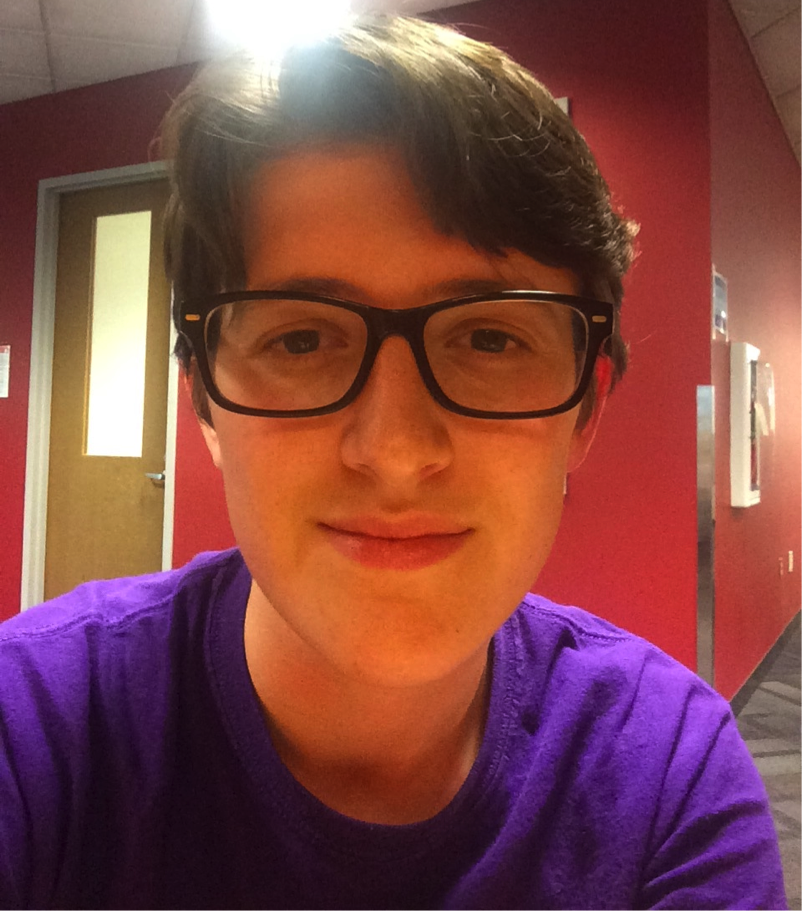
URSP Student Benjamin McDowell Studies Volatile Compounds


My project is the implementation of electrospray ionization in mass spectrometry for the study of volatile compounds.  Mass spectrometry is extensively used to identify molecular compounds by mass, both as a whole molecule and as fragments.  However, due to the presence of fragments, samples must be studied in isolation, achieved through gas chromatography.  Electrospray ionization offers an alternative to traditional ionization, which allows for analysis in the absence of chromatography.  Volatile compounds are best suited for this method due to their high vapor pressure.  This allows the spectrometer to work as an “electronic nose,” as volatile compounds are commonly associated with smells.  The hope is to use this “electronic nose” in the detection and identification of volatile compounds, often correlated with disease.  Currently my work focuses on the assembly of a vacuum system, needed to accommodate the electrospray setup as the input of the mass spectrometer.  To this end I am building several metal cones, known as skimmers, which guide the sample and are essential to the electrospray process.  The skimmers are made using electrodeposition, where thin layers of nickel are deposited on an aluminum template.  My weekly work typically involves a mix of electroplating nickel, machining new aluminum templates, and assembling the remainder of the vacuum system.  My favorite part of this project so far has been working with instrumentation and gaining a better understanding of methods of chemical analysis.  One unexpected skill I have learned is how to use a lathe, which is necessary for shaping the aluminum templates and removing the skimmers from the template.  In general my interests in Chemistry involve the analysis of molecular compounds, namely through spectrometry.  I hope to build off this research experience by pursuing a PhD in Chemistry after my graduation in the spring of 2018.

Friday, November 10, 2017

URSP Student Lisa Mcanulty Examines Pharmaceuticals and Personal Care Products in Potomac River water and sediment

My name is Lisa McAnulty, and I am currently a junior working towards a B.S. in Chemistry with a concentration in Analytical and Environmental Chemistry. This Fall semester, I am continuing my research from my intensive summer group project under the advisement of Dr. Huff and Dr. Foster. This project involved looking at pharmaceuticals and personal care products in Potomac River water and sediment samples. This is an important issue because wastewater treatment plants are currently not regulated to remove these emerging contaminants before releasing their effluent back into the environment. Over the summer, we found significant levels of several pharmaceuticals and personal care products in sediment samples collected from Hunting Creek and Gunston Cove. Of these, the most notable were caffeine, a metabolite of venlafaxine, and a metabolite of nicotine. This semester, I am continuing the quantitative analysis of the samples collected to determine how much of other pharmaceuticals and personal care products are in the water and sediment samples.

Recently, our lab moved into the Potomac Science Center located in Belmont Bay. The average week involves creating calibration standards and spiking solutions, which will both be used for quantification and quality control. There is one more sampling trip out on the River planned, where more sediment and water samples will be collected from Gunston Cove and Dogue Creek. After collection, the water and sediment are put through an extraction process that pulls the target analytes out of the samples, at which point they can then be run on our instrument.The analytical instrument being used for this project, the LC-MS, is a powerful tool that has many applications in research. I am really excited for the chance to be able to familiarize myself with its operation, and I hope to continue along the environmental analytical chemistry path.

Thursday, November 9, 2017

URSP Student Tovga Haji Determines if Parabens and Sunscreen Agents are Present in the Potomac's Sediment

My project is to determine whether parabens and sunscreen agents are present in the sediment of the Potomac River and to quantify their presence. Parabens are a type of preservative that are used in many household items such as cosmetics, deodorants, and shampoos. Sunscreen agents are the compounds in sunscreen that absorb UV light. Both parabens and sunscreen agents have a small amount of estrogenic activity, meaning that that the compounds can act like estrogen. When we take showers, wash our faces, etc. these parabens and sunscreen agents wash away into our sewage to be treated by wastewater treatment plants. Local wastewater treatment plants (WTPs)  have been investigated for the presence of different compounds with estrogenic activity and findings indicate sunscreen agents and parabens may be in the discharge of the WTPs.

I was interested in this project because I want to understand the impact of humans on the environment and the impact of these environmental changes on human health. Before I can research the direct impact of human-caused environmental changes on human health, I need to understand the impact of human consumption and waste on the environment through this project examining the contamination of parabens and sunscreen agents in the Potomac River. I am currently on the pre-med track. This research will inform my understanding of our exposures to compounds with estrogenic activity. Changes in our hormonal activity have been a source of increasing interest in the medical community with connections to diseases such as obesity, diabetes, and osteoporosis.

The lab where I conduct my research moved from the SciTech campus to the Potomac Science Center in September. This delayed the planned schedule of the research project, I conducted literature review during the move. It was a blessing in disguise, because I was able to find a method to be able to analyze parabens and sunscreen agents at the same time. I learned that the frustration of a literature review is well worth the effort and integral to effective research.

Wednesday, November 8, 2017

URSP Student Thalia Dimopoulos Researches The effects of A. bisporus on the Circadian Rhythms and Spatial Memory of (hAPP) Transgenic Mice

My name is Thalia Dimopoulos am I'm a senior studying neuroscience and doing OSCAR’s fantastic program for the second consecutive semester! My mentor is Dr. Jane Flinn, the director of the Cognitive and Behavioral Neuroscience program here at Mason. Together, we came up with my current project, which is “The effects of A. bisporus on the Circadian Rhythms and Spatial Memory of Human Amyloid Precursor Protein (hAPP) Transgenic Mice”. Essentially, I am feeding transgenic and wildtype mice a 10% white button mushroom diet three times a week, and mice not on the diet are consuming their regular food yet in the same liquefied form as the diet of 10% mushrooms. I am performing behavioral tests on my mice at 3 and 8 months of age, which include Morris Water Maze (to test their spatial cognition) and circadian rhythm trials (to examine their sleep/wake cycles).

Since I have been working on this project since May, I have experienced a great deal of growth in this field of research. The principle aspect of research I have learned over the past few months, and will continue to learn, is plans change. I have had my sample size change, the parameters of mushroom feedings, and many more changes in pursuit for the experiment’s success. The adjustments in experimental design have been trying, though they have taught me research relies on flexibility and patience. Grit is also essential in performing research, by managing my own research I have seen myself mature intellectually. I can see this project being of great use to my future because I want to be on the forefront for helping fight Alzheimer’s. I would like to either receive an MD in geriatrics or a PhD in Cognitive and Behavioral Neuroscience (with an Alzheimer’s concentration) so I can somehow make a difference in patients’ lives; whether it’s face-to-face or behind the microscope. I love research and I am looking forward to continuing this path!


Tuesday, November 7, 2017

URSP Student Rebecca Beuschel Works in the Grant Lab at SciTech Campus

Hello! My name is Rebecca Beuschel. I am a junior Biology and Neuroscience student working in the Grant Lab at the Science and Technology campus. My project is a branch of the main IPF project, which is focused on discovering the possible causes of the terminal lung disease idiopathic pulmonary fibrosis (IPF). I have been a part of this project since August 2016. This semester, my project focuses on looking at contraction patterns of collagen, a structural protein in the extracellular matrix, in both normal lung fibroblasts and fibroblasts from patients with IPF. The focus is on the expression levels of multiple proteins, including PLOD, which is involved in collagen contraction.

I initially got interested in this project after taking cell biology with Dr. Grant during my first semester at Mason. I expressed interest in working to discover if I wanted to go to medical school or to focus on research and graduate school. She gave me the opportunity to work in her lab for the Spring 2016 semester and both train and get a taste for the IPF project. I’ve been working on this project with the other members of the Grant Lab ever since.

Getting the chance to work in a lab and see what research in biology was really like, I changed my long-term goals from being a medical doctor to becoming a professor (of something in the scope of molecular and cell biology) while also leading a lab. Working on a project and gaining lab experience this early is just the first step to achieving my goals in life. I’ve learned a lot of basic cell biology and genetics lab techniques so far, and have gotten the chance to present research. I’ve also learned how to properly convey information when presenting – understanding how knowledgeable the audience is on my topic and how to get the audience to understand the information.

Work is divided between my partner and I. We do a number of things in the lab during the week: set up collagen matrices with the cell samples in order to mimic the lung environment, extracting RNA from these matrices and/or plates and converting it to cDNA, setting up PCRs (polymerase chain reactions) – a method of amplifying a certain sequence of DNA based off leader sequences, called primers, that cover both ends of the sequence – for the cDNA, toxicity assays for specific drugs of interest, or setting up plates for sequencing (we do a lot during the week!).


I’ve discovered the value of teamwork this semester. I usually work on my projects alone. However, the magnitude of the project called for two people working together. Collaboration makes the research process more enjoyable – more work gets done each week, and I personally get to learn more each time I go into lab.