Friday, August 12, 2016

URSP Student Highlights: Scott Saunders


Hello, I am Scott Saunders; a rising senior majoring in history and minoring in legal studies. This summer I have been taking part in a research project organized by 4VA and OSCAR and sponsored by the National Endowment for the Humanities. The project is coordinated and headed by Professor Tom Ewing of Virginia Tech who has not only been guiding the course of this project, but is also a major part of the research. I am a part of a varied group of eight students and graduates from three Virginian universities. Our respective academic backgrounds are in several different areas, including history, mathematics, communications, and various sciences. The focus of our research is the study of Tuberculosis in 19th century United States; we conduct this research by searching through and analyzing obituaries from the years 1870 to 1910. From these obituaries we gather any and all information about the person, their lives, and the Tuberculosis which led to their death.
Through this research we hope to further explore and understand the effect of Tuberculosis upon Americans; both personally and as a society. Through our exploration of the disease in America we have further narrowed our research into various sub-themes. One of the sub-themes that attracted my interest was medical advertisements for Tuberculosis. The incredible similarities between contemporary advertisements and 19th advertisements were striking, although the outlandish claims which were all too common in the latter have since been regulated.
            My colleagues, Professor Ewing, and myself meet every week over Skype to discuss progress on the research and to develop the next steps to be taken in the project. Due to the nature of the project and of the various locations of the team members we use various forms of digital communications to facilitate. This creates a unique opportunity to evaluate the effectiveness of digital, collaborative communication. Alongside our typical data gathering we also read various medical journals, books, and histories which pertain to both the research as a whole as well as the sub-themes.
            As part of the team I have come to understand not only professional academic work, but also what technology means for academics in the future. The use of Skype, Slack, Google Docs, and e-mail has proven how effective digital communication can be for academia. We have shown that the digital era can produce results that equal or even exceed those produced by projects which meet physically. This effectiveness and efficiency might be just another example of the way in which academics can proceed. Collaboration across all countries, institutions, and fields of study should be taken advantage of.
For myself, the opportunity to work on a professional program with other students alongside professorial guidance, has been incredible. To be able to apply what you have been learning throughout your academic career in a project outside of the classroom is a relief. A relief in that your studies have been worthwhile and character forming; that you get to apply it even further when you present in front of other academics and professionals. It is truly something to be called an academic colleague by actual scholars and professionals. I have come to appreciate the importance of effective communication, of sharing ideas, of learning from others. This last one I believe to be paramount. No matter someone’s level of experience, in academics or life, there is always purpose in listening.

Thursday, August 11, 2016

URSP Student Highlights: Olivia Stanford


As a double major in Community Health and Integrative Studies, I often found it hard to answer this question. For the longest time, I was not sure if I wanted to go down a medically-focused path or a politically-focused one. Did I want to pursue a career in Global Community Health or International Studies? Both majors offer many opportunities, especially at a school like George Mason University “where innovation is tradition” and “freedom and learning” are the core values. However, I needed a way to narrow down my career choices in the future.
That is when my first professor at George Mason, Dr. Cher Weixia Chen, offered me the opportunity to research with her. In the past, Dr. Chen conducted research on international law and legal studies, concentrating on equal pay and, currently, women worker’s rights. I was really excited when she presented this chance: I would gain research experience and perhaps find a future career path that interested me. With a topic to focus on—Maternity protection—I began the search for a research question. My search led me to terms like social insecurity and social protection; it took me to entities like the International Labour Organization and the World Bank. Initial literature reviews revealed the present state of policies offered to women and working mothers, eventually bringing me to what would become the heart of my project: the social insecurity of women in the informal sector.
Maternity protection is a tricky part of the social security spectrum. For women who work in the non-standard employment sector, it is even more difficult to ensure their human rights. It had me wondering: how is America doing with this? Where does America stand on the spectrum? To find out, I decided to survey working mothers, employers, and relevant government officials in Northern Virginia as my sample focus area. Originally, I planned to find most of my participants through snowball-sampling. This method relied on individuals to spread the word of this study to bring people in. However, one thing I learned is to expect the unexpected and be flexible.
It’s difficult conducting research of any kind, especially when there is no formal setting or directing principal investigator to help guide the process: I conducted interviews on the spot or arranged them around the schedules of advisory board members in different government departments; I had to alter my approach repeatedly for the different groups I interviewed, especially in the event I ran into individuals that spoke little to no English.
Overall, this was a trying experience with crowning moments (like meeting a deadline) and pitfalls that almost ended the research (finding mothers to participate). Nevertheless, with encouragement and advice from my family and staff mentor, I grew as an academic scholar and I’m more confident in my research skills.
In the future, I hope to continue this research, improving on the methods, and eventually publishing the results to see improvement in America’s maternity protection policies.

Wednesday, August 10, 2016

URSP Student Highlights: Rachel Haley

My name is Rachel Haley, I am a sophomore double-majoring in Chemistry and Microbiology. I am currently researching the fungal microbes of microbial communities at shipwreck sites in the Gulf of Mexico.  The primary goal of my research is to establish that fungi are present at these shipwreck sites and identify the phylotypes of these fungi.
I am interested in studying the specific fungi, identifying the microbes that populate the communities at the shipwrecks, and how my research fits in and contributes to the greater project that is the focus of my lab. I work for Dr. Leila Hamdan and Dr. Jennifer Salerno in their lab at George Mason’s Prince William campus. The lab is working with BOEM on SCHEMA: shipwreck corrosion, hydrocarbon exposure, microbiology, and archaeology. This project studies whether shipwreck sites act as artificial reefs, island theory of biogeography, and the effect of the 2010 oil spill on the microbial communities-their composition, metabolic functions, and relative abundance. My research will contribute novel information regarding fungal groups and expands on previous research with respect to both bacteria and archaea.
In May of this year I joined Dr. Hamdan and other members of our lab and several colleagues from the Naval Research Institute on the R/V Pelican for a week of collecting samples in the Gulf of Mexico. Since returning, I have worked with Dr. Hamdan in the lab at Prince William, performing DNA extractions and working with bioinformatics pipelines to analyze the DNA sequences of samples collected during the previous sample collection in 2015.

Tuesday, August 9, 2016

URSP Student Highlights: Matthew Eiman


What’s up Mason Nation! I am Matthew Eiman and I am a junior, neuroscience major from Altoona, PA. I am currently researching the relationship between sleep efficiency and cognitive performance in collaboration with Dr. Ali Weinstein and the wonderful staff of the Center for Study of Chronic Illness and Disability (CCID).


We spend roughly 1/3 of our life sleeping. It is such an integral and paramount part of our lives, but often, it can be neglected. Recent research has explored the deleterious effects insufficient sleep can have on one’s health. I’m taking a little different approach when it comes to sleep. I am using a sleep efficiency algorithm calculated by an Actigraphy accelerometer (something like a FitBit) that participants wore to bed. Sleep efficiency, to me, is a superior measure of just how well somebody rested. Think about how much time you are asleep; and then factor in how long it took you to get to sleep, how many times you woke up, and how many times you had to get out of bed to go to the bathroom, let the dog out, etc. That’s sleep efficiency.

My journey starts about the second month of my freshman year when I was looking to get engaged with undergraduate research. I contacted Dr. Weinstein and she got back to me almost immediately to arrange a meeting. I started helping out a little, but I was mostly getting acquainted with a college-level literature search and finding what interested me. As I progressed through my freshman year, Dr. Weinstein mentioned how she had a project with a plethora of unanalyzed sleep data. Given my interest in sleep, I started working on organizing the data and familiarizing myself with the study. This continued into my sophomore year, but came to a little halt when I participated in a clinical research internship with Inova Fairfax Hospital through HHS 492. Because of OSCAR’s Undergraduate Research Scholars Program, I have been able to pursue this interest of mine that has been literally years in the making, for which I am extremely grateful.

Outside of my research, I am a captain of our club, Men’s Ultimate Frisbee team as well as a member of the Roosevelt@Mason’s Energy and Environment policy group. I also serve as a Peer Research Mentor in the honors freshman writing class Honors 110: Research Methods.

Hail to George Mason!

URSP Student Highlights: Marina Martínez


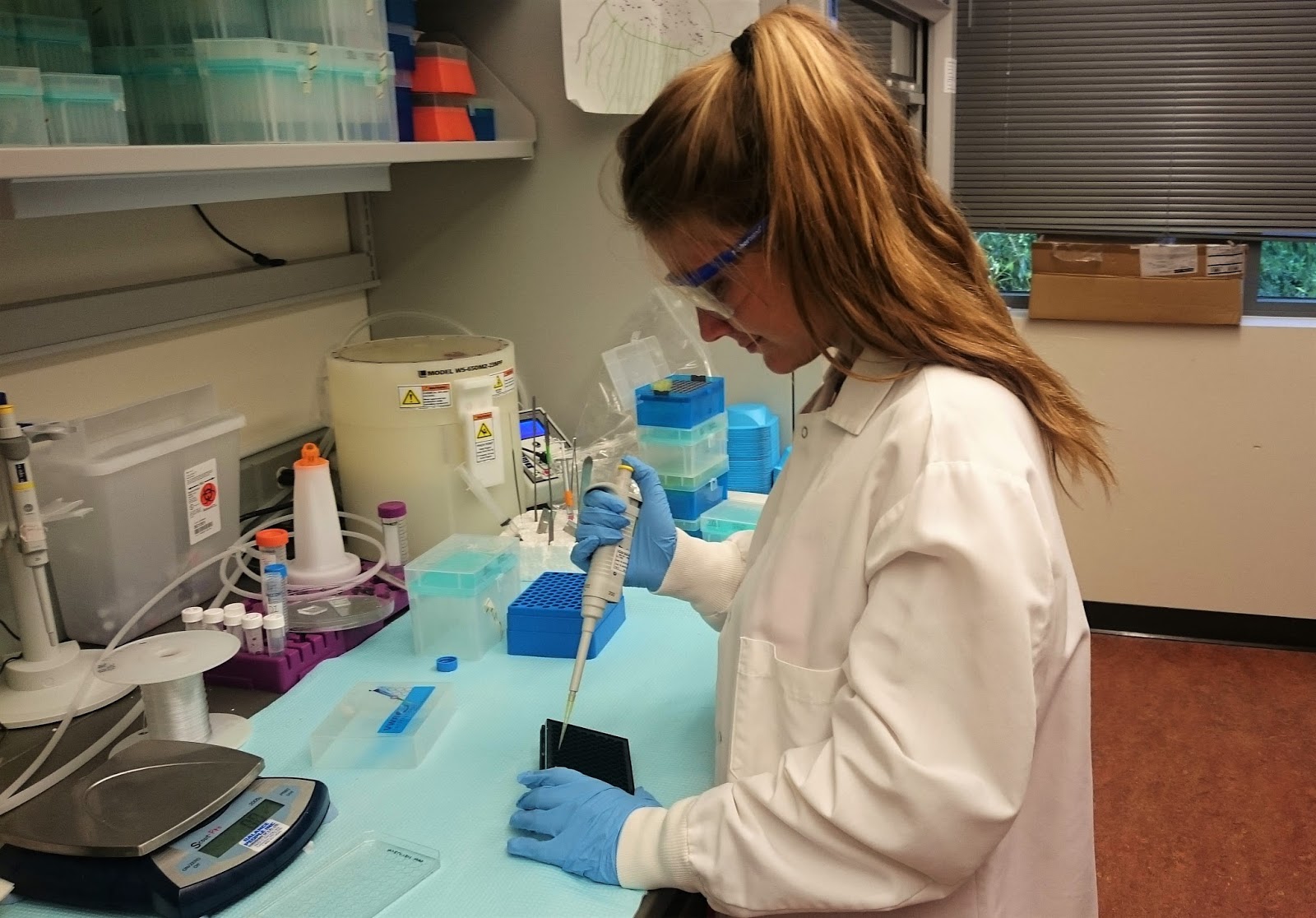
Hello, my name is Marina Martínez and I’m currently a senior majoring in Bioengineering. I am working with Dr. Nitin Agrawal and his PhD. student Steven Roberts in the Microfluidic Single Cell Analysis Laboratory in Engineering (µ-SCALE), located at Krasnow Institute of Advanced Studies. I am studying the influence of osmolarity on epithelial cell phenotype.
On a weekly basis I attend Dr. Agrawal’s lab meetings, where we discuss our projects individually. By this manner I do not just restrict all my knowledge just in my project, I actually get to know all the different studies running in the lab. Besides this, I read scientific papers to familiarize with the field and better understand all the biological processes happening at cellular level regarding my research. Reading and listening to other peoples’ studies have habituated me to the most technical words in my field, which is an essential aspect for my professional future. Moreover, planning the timeline, as well as designing the approach, overcoming difficulties during the experiments, etcetera, have made me become more independent, skillful and confident. Throughout the project I am also experiencing how team work is and I am learning a lot of lab procedures such as immunofluorescence, cell culture or how to analyze scientific data. In brief, I am learning more than I thought I would and this is a big first step into the scientific community.
OSCAR and its Undergraduate Research Scholar Program (URSP) have given me the huge opportunity of experiencing how working in a lab feels. I love the atmosphere in laboratories and I know that working in one of them is my main intention. Because of that, being part of the URSP program this summer is a step forward to my desired future.  I am an exchange student from Spain at GMU, and in my country it is not possible to do an internship with any professor while you are in college. Therefore, being part of this program has meant for me much more than carrying out an idea; it meant achieving a goal that would have been impossible to reach back in my country.